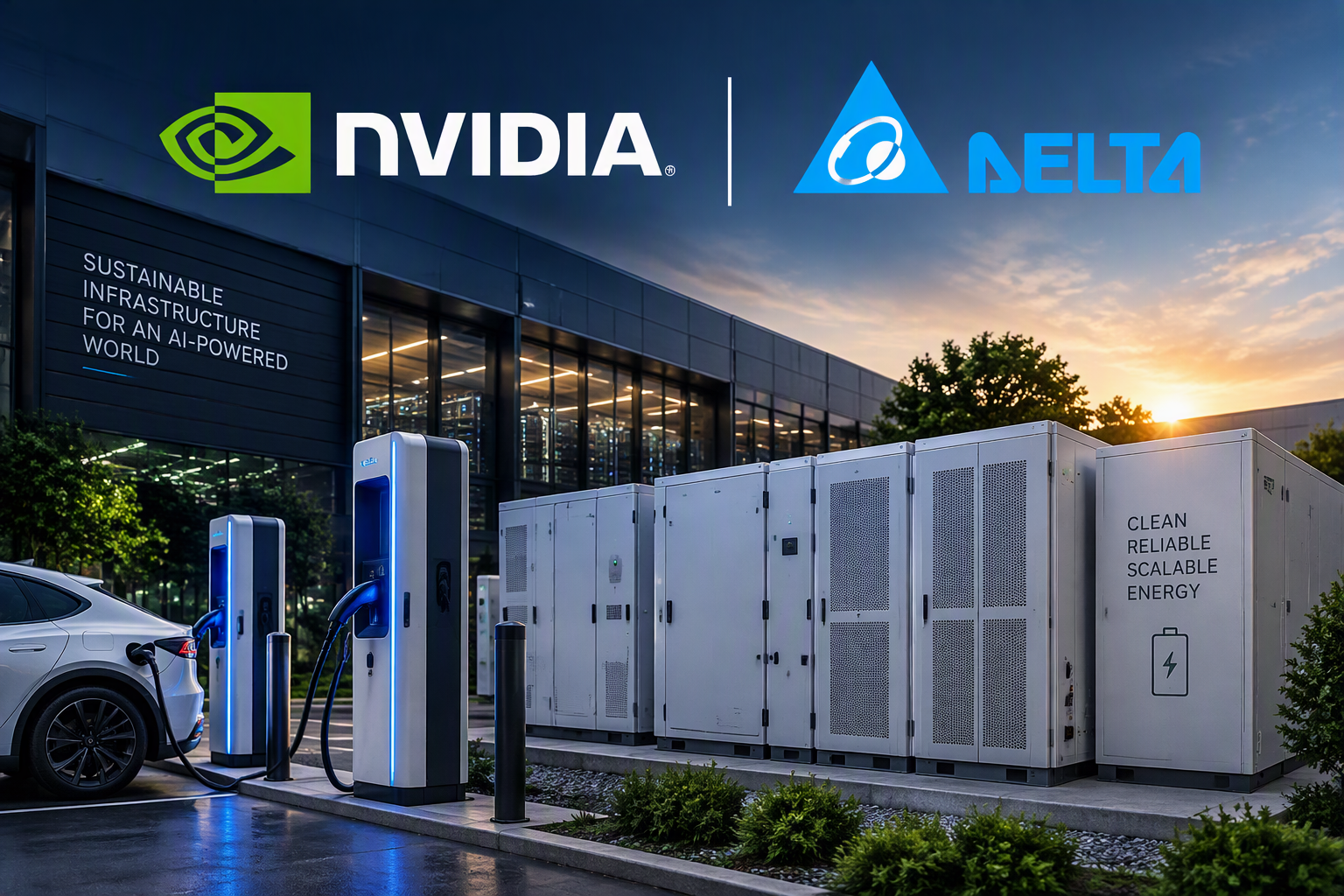
Delta Electronics will combine its automotive energy-management, xEV powertrain, in-vehicle computing and system-integration expertise with NVIDIA Hyperion and the NVIDIA Halos safety system.
Delta Electronics has announced a collaboration with NVIDIA to support the development of next-generation autonomous-driving systems using the NVIDIA Hyperion reference platform.
The companies plan to combine Delta’s experience in automotive energy management, xEV powertrain systems, in-vehicle high-performance computing and system integration with NVIDIA Hyperion and the NVIDIA Halos safety system.
For automakers and mobility operators, the collaboration could support the integration of high-performance autonomous-driving compute by combining NVIDIA’s reference architecture with Delta’s automotive power, computing and system-integration expertise.
The announcement does not identify a specific automaker, vehicle model, robotaxi program, production contract or deployment schedule arising from the collaboration. Financial terms and expected development milestones were also not disclosed.
Delta will contribute automotive power and system-integration expertise
Delta’s role will focus on its automotive electronics, energy-management, xEV powertrain, in-vehicle computing and system-integration capabilities.
The company develops technologies for electric and electrified vehicles, including power-conversion systems, powertrain components and equipment supporting automotive computing systems.
Separately from the announced collaboration, Delta’s automotive portfolio includes cooling technologies for power electronics, onboard chargers, DC-to-DC converters, electronic control units and advanced driver-assistance system computing equipment.
This experience could be relevant because high-performance autonomous-driving computers and sensor systems create additional power-delivery and thermal-management requirements within the vehicle.
Under the collaboration, Delta will work with a dedicated NVIDIA engineering team to integrate its automotive capabilities with the NVIDIA Hyperion architecture.
“Autonomous driving requires years of technology development, continuous innovation, and strong system integration,” said James Tang, Executive Vice President of Mobility Business Category at Delta.
“Our commitment to the EV sector began several years ago, developing strong expertise in power electronics and key automotive technologies, and accumulating extensive development experience with world-class automakers.”
Tang said the collaboration would support the integration of artificial intelligence and high-performance computing into more advanced autonomous-driving functions.
NVIDIA Hyperion provides a Level 4-ready reference architecture
NVIDIA describes NVIDIA Hyperion as a production-ready development platform and reference architecture for robotaxis and Level 4 autonomous vehicles.
Hyperion is not a complete autonomous vehicle. It provides a standardized technical foundation that automakers, autonomous-driving developers and mobility companies can integrate into different vehicle platforms.
The architecture combines in-vehicle computing, networking, autonomous-driving software, safety mechanisms and a standardized sensor suite. The sensor configuration can include cameras, radar, lidar, ultrasonic sensors and equipment for monitoring the vehicle cabin.
According to NVIDIA’s current specifications, the Hyperion 10 architecture uses two NVIDIA DRIVE AGX Thor systems-on-chip and can support programs extending from Level 2 driver assistance to Level 4 automated driving.
The configuration used in any Delta-supported program would depend on the automaker, vehicle architecture, sensor suite and intended autonomous-driving application.
A common reference architecture can reduce repeated integration work across vehicle programs. Each application must nevertheless be adapted to the vehicle’s compute, sensor, electrical, thermal and safety requirements.
Using Hyperion does not by itself certify a vehicle as Level 4. Each autonomous-driving program must still complete vehicle-specific engineering, testing, safety validation and regulatory approval.
NVIDIA Halos will support the safety architecture
The collaboration will also use NVIDIA Halos, NVIDIA’s full-stack safety system for AI-driven vehicles.
NVIDIA positions Halos as an architecture spanning vehicle hardware, autonomous-driving software, development processes, simulation and validation technologies.
When integrated with Hyperion, Halos is intended to provide a safety foundation for developing Level 4 autonomous systems.
NVIDIA says Hyperion includes redundant compute, sensors and functional-safety mechanisms and is designed to support ISO 26262 ASIL-D-capable implementations. This does not mean that a complete vehicle automatically receives ASIL-D certification by using the platform.
“Level 4 autonomous driving requires powerful in-vehicle computing, a comprehensive sensor architecture and close collaboration across the automotive ecosystem,” said Rishi Dhall, Vice President of Automotive at NVIDIA.
“By combining Delta’s automotive and system integration expertise with NVIDIA Hyperion, we can accelerate the development of safe, intelligent and scalable autonomous driving systems for the next generation of mobility.”
The announcement does not state that Delta has completed an independent safety certification for an autonomous-driving system based on Hyperion.
Any production deployment would remain subject to applicable functional-safety, cybersecurity, vehicle-homologation and autonomous-driving regulations.
Level 4 automation operates within defined conditions
Level 4 automated driving refers to a system capable of performing the complete driving task without human intervention within a defined operational design domain.
That domain may be limited by geography, road type, speed, weather, time of day or other operating conditions. A Level 4 vehicle does not necessarily operate autonomously on every road or under all circumstances.
NVIDIA is positioning Hyperion for passenger vehicles, robotaxis, autonomous shuttles, delivery fleets and commercial vehicles. The platform is also designed to support software updates and different vehicle applications across global markets.
NVIDIA has announced that BYD, Geely, Isuzu, Nissan and TIER IV are developing Level 4-ready vehicle or mobility programs using Hyperion or NVIDIA DRIVE AGX Thor technologies.
Delta’s announcement adds an automotive power and system-integration supplier to the wider Hyperion ecosystem. It does not indicate that Delta will independently develop the autonomous-driving software or manufacture a complete autonomous vehicle.
High-performance computing increases vehicle power and cooling demand
Autonomous vehicles must process large volumes of information from cameras, radar, lidar and other sensors with minimal delay.
The vehicle’s computer uses this data to identify objects, interpret road conditions, track other road users and support automated-driving decisions.
Greater computing performance can increase power consumption and heat generation. Delta’s background in automotive power electronics and thermal management could therefore support the integration of Hyperion into electric and electrified vehicle platforms.
Efficient power conversion and cooling can help maintain computing performance while limiting auxiliary energy consumption.
This is particularly relevant to electric vehicles because energy consumed by computing, sensors and cooling ultimately comes from the vehicle’s electrical system and can affect overall efficiency.
However, the collaboration announcement does not disclose power-consumption targets, cooling specifications, computing-performance objectives or predicted effects on vehicle range.
Delta and NVIDIA will need to adapt the platform to the electrical, thermal and physical constraints of individual vehicle architectures developed with customers.
Collaboration targets automakers and mobility partners
Delta said it will draw on its experience working with global automakers, while NVIDIA will contribute its broader automotive and autonomous-driving ecosystem.
The companies intend to pursue opportunities across autonomous-driving technology, ecosystem development and the smart-mobility market.
NVIDIA’s Hyperion ecosystem includes automakers, mobility operators, automotive suppliers, sensor manufacturers and autonomous-driving software developers. The reference architecture provides these companies with a common technical foundation for developing and validating Level 4-ready systems.
For Delta, the collaboration could extend its automotive business beyond powertrain and energy-management components into integrated in-vehicle computing and autonomous-driving systems.
For NVIDIA, Delta contributes experience in automotive energy management, power electronics, xEV systems and vehicle-system integration.
The commercial significance of the agreement will depend on whether the development work leads to named vehicle programs, customer contracts or production deployments.
Neither company has announced when the first integrated system will be demonstrated or when a Delta-supported Hyperion platform could enter a production vehicle.
FAQ: Delta and NVIDIA Autonomous Driving Collaboration
What have Delta Electronics and NVIDIA announced?
Delta Electronics and NVIDIA have announced a collaboration to support the development of next-generation autonomous-driving systems. Delta will combine its automotive energy-management, xEV powertrain, in-vehicle computing and system-integration capabilities with NVIDIA Hyperion and NVIDIA Halos.
What is NVIDIA Hyperion?
NVIDIA Hyperion is a reference compute and sensor architecture for robotaxis and Level 4 autonomous vehicles. It combines NVIDIA DRIVE AGX compute, a standardized sensor suite, autonomous-driving software and safety technologies.
What is NVIDIA Halos?
NVIDIA Halos is NVIDIA’s full-stack safety system for AI-driven vehicles. It spans vehicle computing, autonomous-driving software, simulation, development processes and validation technologies.
What role will Delta Electronics play?
Delta will contribute its experience in automotive energy management, xEV powertrain systems, in-vehicle high-performance computing and system integration. The announcement does not define a particular production component or vehicle platform that Delta will supply.
Does the collaboration include a production vehicle?
The announcement does not identify a specific vehicle, automaker, robotaxi program or production schedule. It describes a technology-development and ecosystem collaboration rather than a confirmed production contract.
What does Level 4 autonomous driving mean?
Level 4 automation allows a vehicle to perform the complete driving task without human intervention within a defined operational design domain. The vehicle may still be limited to particular roads, locations, speeds, weather conditions or operating environments.
How is the collaboration relevant to electric vehicles?
Advanced autonomous-driving computers and sensor systems require power delivery and thermal management. Delta’s experience with electric-vehicle power electronics, xEV powertrains and cooling technologies could support the integration of high-performance autonomous-driving compute into electric vehicle platforms.