Nearly 88% of respondents answering the pricing question said they would pay more for an otherwise similar golf cart with wireless charging, while 57.3% selected a premium above $500.
A September 2026 survey conducted by ci360 found strong stated interest in wireless charging among current golf cart owners and people considering buying a cart within the next three years.
The report, Wireless Golf Cart Charging: Consumer Interest and Premium Feature Potential, analyzed a qualified sample of 309 respondents:
- 135 current golf cart owners
- 71 people planning a purchase within 12 months
- 103 people considering a purchase in one to three years
Among respondents who answered the pricing question, nearly 88% said they would pay more for an otherwise similar golf cart equipped with wireless charging.
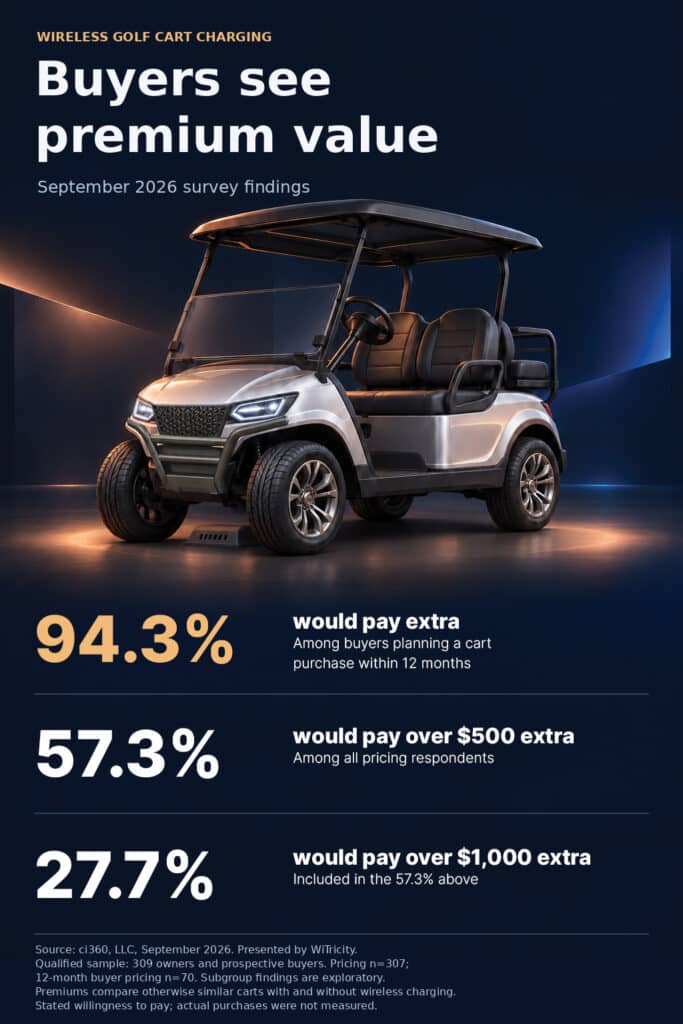
More than half, 57.3%, selected an additional price above $500. A smaller group, 27.7%, selected a premium above $1,000. The latter group is included within the 57.3% figure and should not be added to it.
WiTricity AI Tech presented the findings as evidence that wireless charging could be offered as a premium feature by golf cart manufacturers, dealers and customization businesses.
The results measure respondents’ stated preferences and willingness to pay. They do not measure completed purchases or predict the level of demand across the wider golf cart market.
Most respondents rated wireless charging highly
Survey respondents were asked to rate the appeal and relevance of wireless golf cart charging.
The results included:
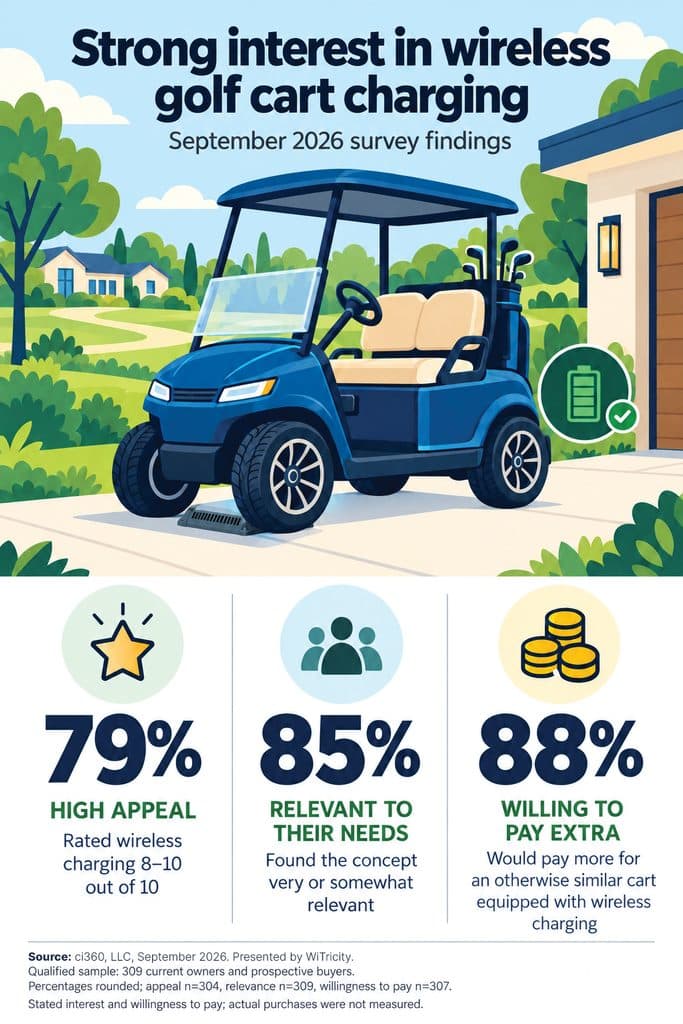
- 78.9% rated the concept 8, 9 or 10 on a 10-point appeal scale.
- 84.8% considered wireless charging very or somewhat relevant to their needs.
- Nearly 88% of pricing respondents said they would pay extra for the feature.
- 57.3% selected a premium above $500.
- 27.7% selected a premium above $1,000.
The infographic rounds the first three results to 79%, 85% and 88% for visual presentation. The article uses the more precise percentages supplied in the press release.
Appeal was based on 304 available answers, relevance on 309 answers and willingness to pay on 307 answers. The results should therefore not be interpreted as percentages calculated from an identical response base for every question.
Buyers reported willingness to pay a premium
The pricing results suggest that some golf cart owners and prospective buyers see wireless charging as more than a minor convenience feature.
Among the 307 respondents who answered the pricing question:
- Nearly 88% said they would pay more for wireless charging.
- 57.3% selected an additional price above $500.
- 27.7% selected a premium above $1,000.
Among people planning to purchase a cart within the next 12 months, 94.3% of those answering the pricing question said they would pay extra. That result represents 66 of 70 near-term buyers.
The near-term buyer finding comes from a relatively small subgroup. It should not be interpreted as evidence that 94.3% of all prospective golf cart buyers would pay more.
The survey also measures stated willingness to pay rather than completed transactions. Actual purchasing behavior could vary according to installation requirements, equipment cost, compatibility, warranty coverage and the final price offered by a manufacturer or dealer.
Convenience and vehicle readiness drive interest
The benefits selected most frequently centered on avoiding manual plug-in charging, having the cart ready when needed and reducing the chance of forgetting to charge.
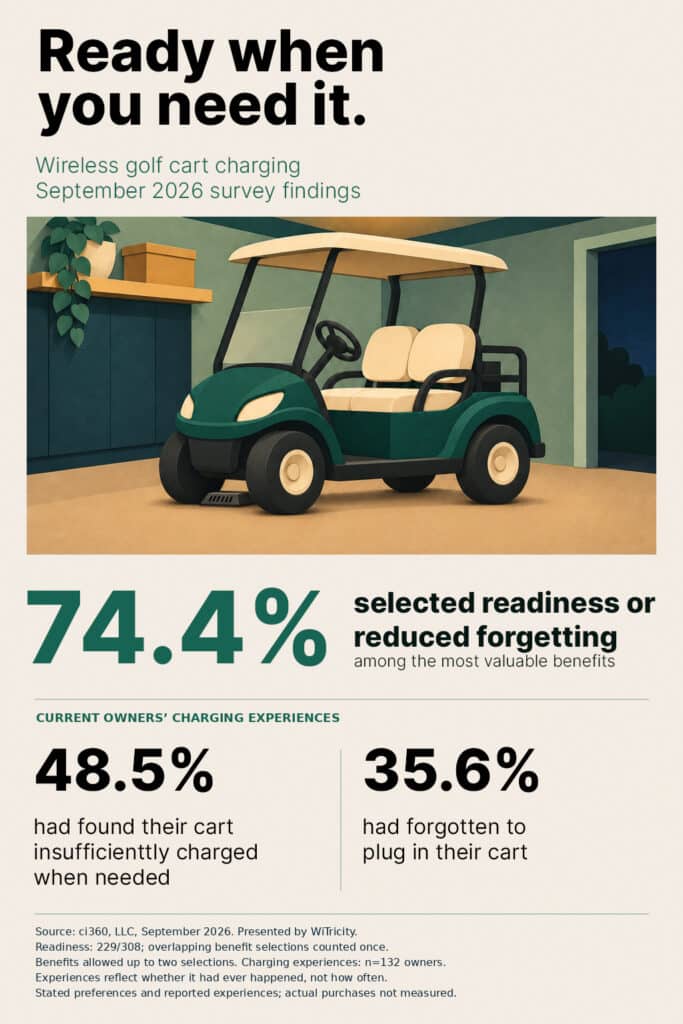
The supplied infographic reports that 74.4% selected readiness or reduced forgetting among the most valuable benefits. The figure is based on 229 of 308 available responses, with overlapping benefit selections counted once.
Respondents could choose up to two benefits.
“People want their cart to be ready when they need it, without having to remember to plug it in,” said Robert Buchanan, Marketing Director at WiTricity.
“The ci360 findings show that owners and prospective buyers see value in that convenience. For manufacturers and dealers, that is a reason to take a closer look at wireless charging as a premium feature customers can appreciate every time they use their cart.”
The survey also asked current owners about their charging experiences.
Among 132 owners answering that question:
- 48.5% reported having found their cart insufficiently charged when needed.
- 35.6% said they had forgotten to plug in the cart.
These responses record whether the problem had ever occurred. They do not indicate how frequently owners experienced insufficient charge or forgot to connect their carts.
Wireless charging starts when a compatible cart parks over a pad
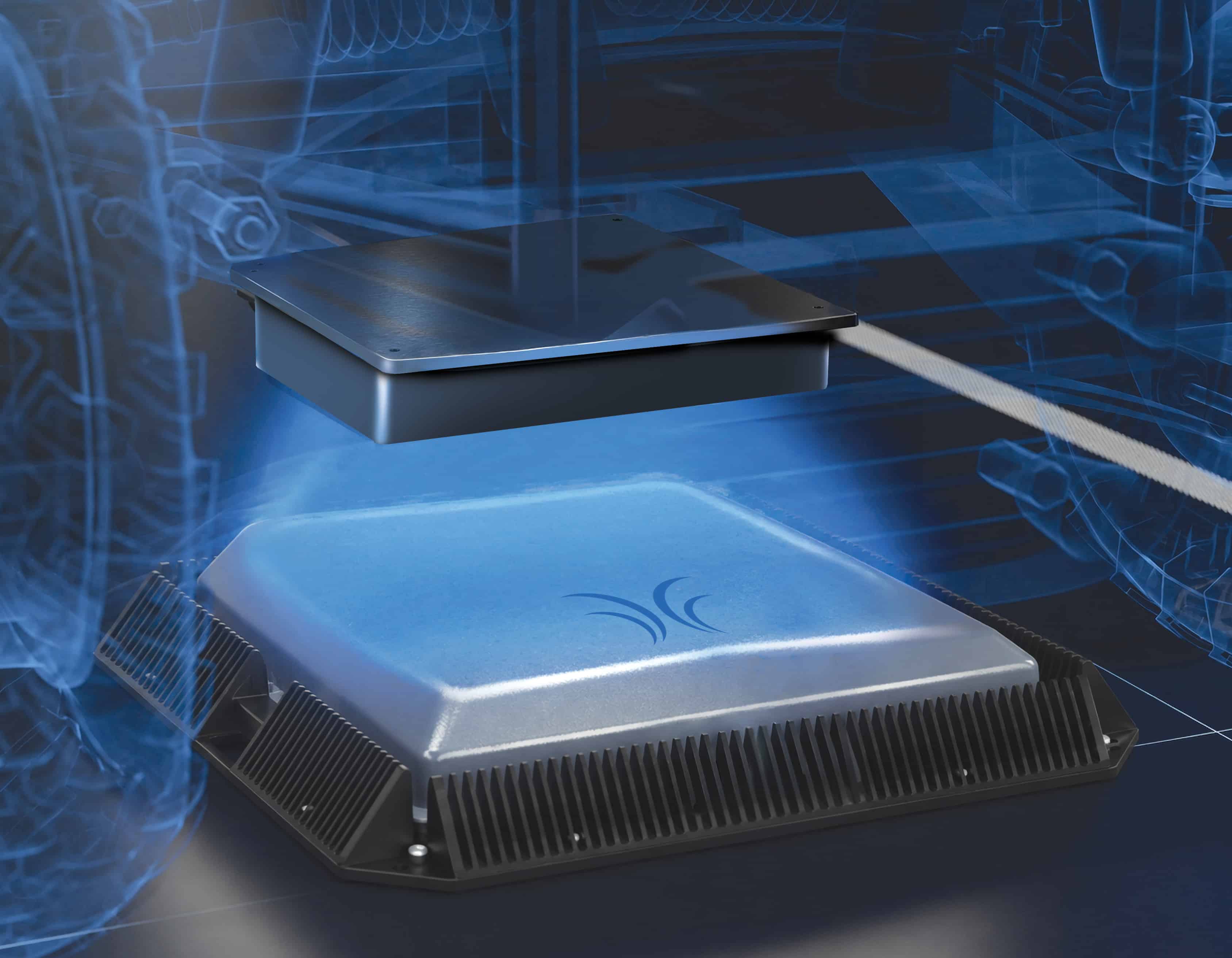
WiTricity describes its system as magnetic resonance charging using a receiver installed on the vehicle and a charging pad positioned on the ground.
When a compatible golf cart parks over the pad, charging begins automatically without the driver connecting a plug or cable.
The intended benefit is not necessarily faster charging. Instead, the system is designed to make charging more automatic and reduce the risk that a cart remains uncharged because someone forgot to plug it in.
Installation would require compatible vehicle-side equipment and charging hardware. The announcement does not provide:
- Charging power
- Charging time
- Electrical installation requirements
- Energy-transfer efficiency
- Vehicle compatibility details
- Equipment pricing
- Installation costs
Those specifications would be necessary to compare wireless charging with conventional plug-in systems.
WiTricity targets manufacturers, dealers and customization shops
WiTricity is presenting the findings to golf cart manufacturers and dealers considering wireless charging as a premium feature.
The company says its technology can be added to compatible existing carts as well as incorporated into new vehicles. That could allow dealers and customization shops to offer wireless charging to both current owners and new buyers.
Potential revenue would come from equipment sales and installation services.
However, the survey does not measure dealer demand, installation economics or actual consumer purchases. It also does not establish a price point that would be commercially viable for manufacturers, dealers or customers.
The finding that 57.3% selected a premium above $500 describes stated willingness to pay. It should not be treated as a recommended retail price for WiTricity equipment or installation.
Survey findings reflect a qualified sample
ci360 conducted the survey in September 2026. The report focuses on 309 qualified respondents drawn from 411 total participants.
The qualified sample included current owners and people planning or considering a golf cart purchase within three years.
The reported response bases were:
| Survey measure | Available responses |
|---|---|
| Wireless-charging appeal | 304 |
| Relevance to respondent needs | 309 |
| Willingness to pay a premium | 307 |
| Near-term buyer pricing | 70 |
| Current-owner charging experience | 132 |
| Readiness or reduced forgetting benefit | 308 |
Because the survey focuses on current owners and prospective buyers, its results describe a qualified sample rather than the general population.
The press release does not provide information about respondent recruitment, geographic distribution, demographic weighting, confidence intervals or margin of error.
The findings are best understood as an indication of stated interest among the surveyed owners and prospective buyers, not as a forecast of golf cart market sales.
Survey points to premium-feature potential
The ci360 findings suggest that wireless charging addresses recognizable pain points for golf cart users, particularly vehicle readiness and forgetting to connect a charging cable.
The strongest commercial signal is the stated willingness to pay: nearly 88% of pricing respondents selected some premium, while 57.3% chose more than $500.
The next test will be whether those stated preferences translate into purchases once customers can compare equipment prices, installation requirements, compatibility and charging performance.
FAQ: Wireless Golf Cart Charging Survey
How many people participated in the survey?
ci360 received 411 responses. The report focuses on a qualified sample of 309 current golf cart owners and prospective buyers.
The qualified sample included 135 current owners, 71 people planning a purchase within 12 months and 103 considering a purchase within one to three years.
How many respondents would pay extra for wireless charging?
Nearly 88% of respondents answering the pricing question said they would pay more for an otherwise similar cart equipped with wireless charging.
The pricing question had 307 available responses.
How much extra would respondents pay?
Among respondents answering the pricing question, 57.3% selected a premium above $500.
Within that group, 27.7% selected more than $1,000. The percentages overlap and should not be added together.
What did near-term golf cart buyers say?
Among respondents planning a purchase within 12 months, 94.3% of those answering the pricing question said they would pay extra.
That figure represents 66 of 70 near-term buyers and should be interpreted within the context of the small subgroup.
Why were respondents interested in wireless charging?
The most frequently selected benefits included avoiding the manual plug-in step, having the cart ready when needed and reducing the chance of forgetting to charge.
The supplied infographic reports that 74.4% selected readiness or reduced forgetting among the most valuable benefits.
How many owners had experienced charging problems?
Among 132 current owners answering the charging-experience question:
- 48.5% had found their cart insufficiently charged when needed.
- 35.6% had forgotten to plug in the cart.
The figures indicate whether respondents had ever experienced those situations, not how often they occurred.
How does wireless golf cart charging work?
WiTricity’s magnetic resonance system uses a receiver installed on the golf cart and a charging pad placed on the ground.
When a compatible cart parks over the pad, charging begins automatically without a plug or cable.