Teledyne Flir has expanded its test and measurement portfolio with four connected tools for EV charging, electrical troubleshooting, HVAC servicing and building inspections.
The new products are the Flir EV86-NACS EV Charger Analyzer, Flir EV86-T2 EV Charger Analyzer, Flir DM266 Compact Thermal Imaging Multimeter and Flir EM57 Thermo-Hygrometer.
All four tools support Flir Meterlink connectivity, allowing field professionals to transfer measurements to a mobile device for data management, analysis and report generation.
For EV charging installers and service technicians, the new analyzers provide a standardized way to validate safety functions, simulate vehicle states and generate consistent commissioning reports across different charger models and connector types.
“Professionals need tools that not only provide accurate measurements but also make it easier to turn those measurements into actionable information,” said Heliel Morales, Business Development Director for Condition Monitoring at Teledyne Flir.
“These new products combine purpose-built testing capabilities with Meterlink connectivity to help simplify workflows from measurement through reporting.“
EV86 Analyzers Target AC EV Charging Stations
| Product | Primary Market | Connector | Key Safety Test |
|---|---|---|---|
| EV86-NACS | North America | NACS + Type 1 adapter | CCID performance |
| EV86-T2 | International (Type 2 regions) | Type 2 + Type 1 converter | RCD performance |
| DM266 | Electrical diagnostics | Test leads | Thermal + electrical fault finding |
| EM57 | HVAC/building | Environmental sensor | Temp, humidity, dew point |
All four tools support Flir Meterlink for connected mobile reporting.
The Flir EV86-NACS and EV86-T2 are designed to test the safety and performance of AC electric vehicle charging stations in residential and commercial environments.
The EV86-NACS supports Level 1 and Level 2 chargers through an integrated North American Charging Standard connector. Flir also supplies the analyzer with a compact Type 1 adapter to expand compatibility with SAE J1772 charging equipment.
The EV86-T2 uses an integrated Type 2 connector and supports AC charging equipment operating in Modes 1, 2 and 3. Flir’s published specifications show compatibility with single-phase and three-phase charging equipment, with voltage measurement extending to 440 V.
The two models address different connector and electrical-system requirements while providing a similar testing and reporting workflow.
Protective Earth Pre-Testing Supports Safer Inspections
Both EV86 models include a Protective Earth pre-test designed to identify potentially hazardous voltage before a technician begins a more detailed inspection.
The analyzers can simulate Control Pilot states, examine Control Pilot waveforms and reproduce error conditions to help technicians assess how a charging station communicates with a connected electric vehicle.
The Control Pilot signal communicates charging availability and allowable current between the EV charger and vehicle. Simulating different Control Pilot states enables the technician to evaluate how the charger responds when a vehicle is disconnected, connected, ready to charge or reporting an error.
The EV86 analyzers also measure loop impedance and display electrical parameters that can help identify wiring, grounding and charger-control problems.
Automated test sequences and pass-or-fail results are intended to reduce the number of manual steps required during installation, commissioning and fault diagnosis.
NACS Model Verifies CCID Performance
The EV86-NACS includes Charge Current Interrupting Device performance verification.
A CCID is a protective function used in North American charging equipment to detect current leakage or other unsafe electrical conditions and interrupt power delivery. A CCID (Charge Current Interrupting Device) is the North American equivalent of a residual-current device (RCD) used in many international charging installations. Both are designed to detect leakage or unsafe conditions and interrupt power.
Flir says the analyzer can test CCID trip time and ramping current, allowing technicians to assess whether the charger’s protection system responds within the expected operating limits. The EV86-NACS also supports error simulation, low-impedance measurement and Control Pilot waveform analysis.
The product has a 3.5-inch display, Bluetooth Low Energy connectivity with a stated range of 10 meters and a CAT II 300 V safety rating under IEC 61010-1, according to Flir’s specifications.
Type 2 Model Supports RCD Testing
The EV86-T2 is designed for markets and charging installations using the IEC Type 2 connector.
Instead of CCID testing, the Type 2 model provides residual-current device performance verification. Its functions include RCD trip-time testing, ramp-current testing, Control Pilot simulation, error simulation, voltage and phase indication and loop-impedance measurement.
Flir lists a built-in Type 2 connector and an included Type 1 converter for the EV86-T2. The analyzer has a 3.5-inch display, a rechargeable battery with a stated continuous runtime of approximately 12 hours and Bluetooth connectivity with a range of up to 10 meters.
The distinction between the NACS and Type 2 products enables Flir to address AC charging installations across North American and international connector environments.
Neither model is intended to deliver charging power to a vehicle. The analyzers simulate vehicle states and measure charger behavior to support installation, validation, commissioning and troubleshooting.
Meterlink Connects Inspections to Mobile Reporting
The main shared feature across the four new products is compatibility with the Flir Meterlink mobile application.
Meterlink allows technicians to capture measurements wirelessly, monitor readings, examine trends and generate reports from a mobile device. The application can display minimum, maximum and average values, establish alarm thresholds and compare data from multiple compatible instruments.
Users can add measurements, notes, images, data logs and short video clips to customized PDF reports. Flir says the application can connect to as many as seven compatible meters simultaneously, although the practical number of active devices may depend on Bluetooth performance and the inspection workflow.
For EV charger technicians, this connected workflow can reduce the need to manually transcribe measurements from the analyzer into a separate service or commissioning report.
The application can also make it easier to document test results for property owners, charging network operators, electrical contractors and maintenance teams.
DM266 Combines Electrical Testing with Thermal Imaging
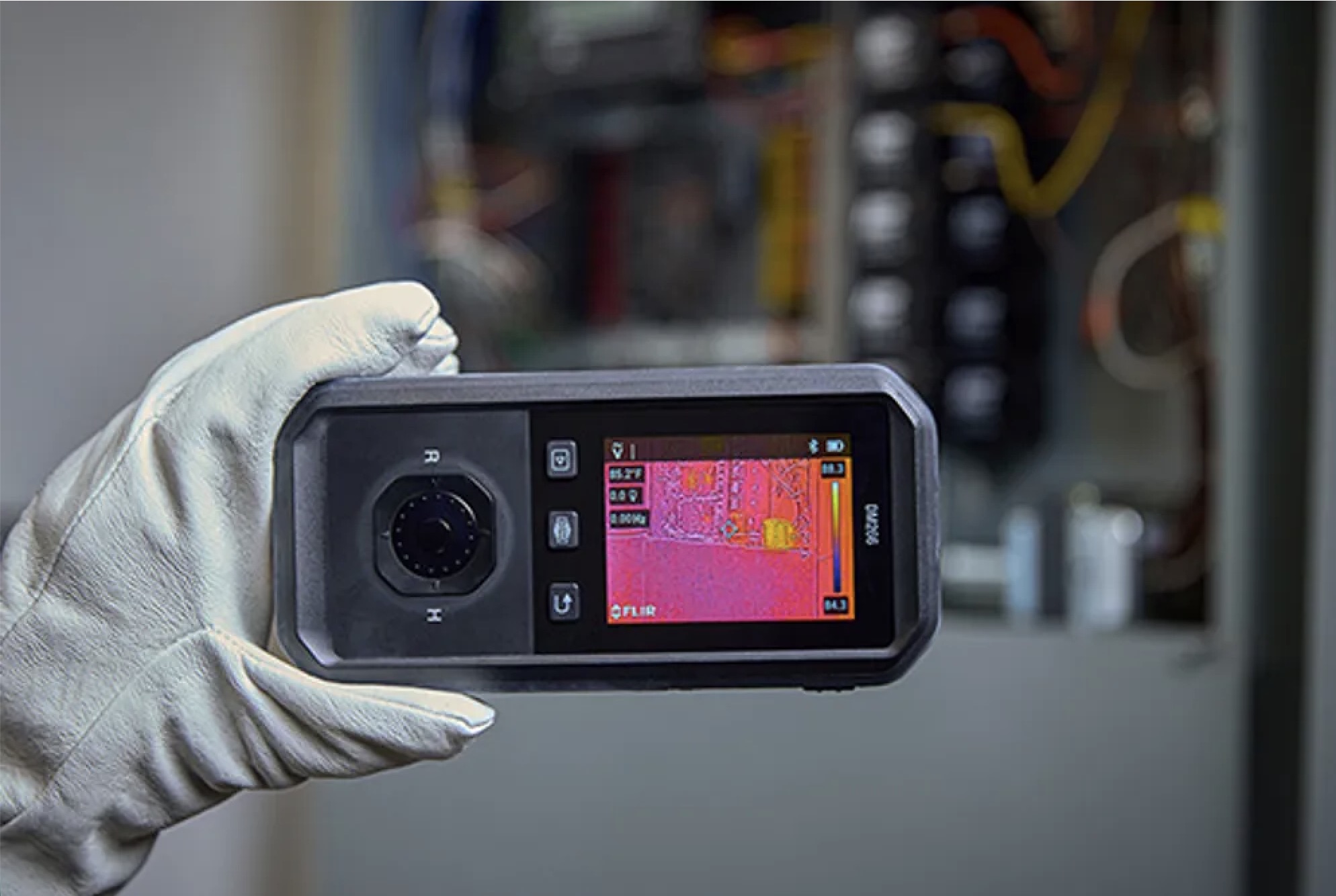
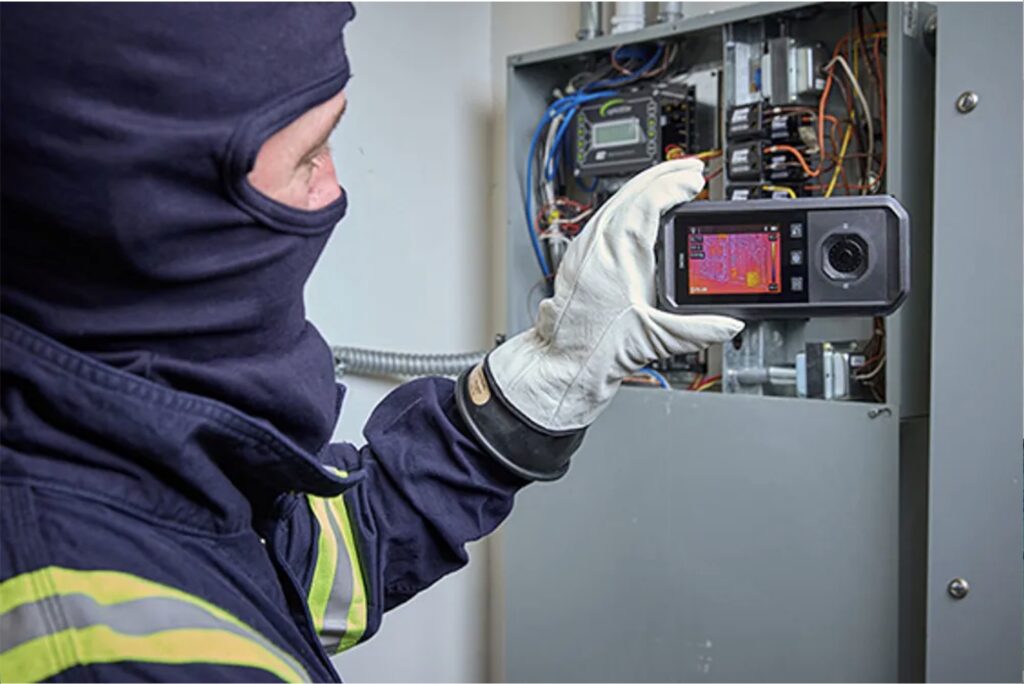
The Flir DM266 is a compact True RMS electrical multimeter with integrated thermal imaging.
The device uses Flir’s Infrared Guided Measurement technology to help technicians locate electrical faults and identify areas requiring further measurement. It also incorporates Flir MSX imaging, which adds visible details to thermal images to improve the clarity of inspected components.
The DM266 has a native infrared resolution of 160 by 120 pixels. Its IR Super Resolution function can increase the thermal image output to 320 by 240 pixels, according to Flir.
The multimeter includes variable-frequency drive mode, an attached remote control for capturing measurements while using the test leads and an integrated magnetic mounting system for hands-free operation.
Its electrical functions include True RMS voltage measurement, resistance, capacitance, frequency, continuity, diode testing and temperature measurement. Flir rates the device at CAT III 600 V under IEC 61010-1.
For charging infrastructure, the DM266 could assist technicians in inspecting electrical panels, cables, terminals, contactors and power electronics associated with EV charging installations. The product is a general electrical diagnostic tool rather than an EV charger analyzer, so charger-specific communication and protection testing remains the role of the EV86 models.
EM57 Measures Temperature and Humidity Conditions
The fourth product, the Flir EM57, is a thermo-hygrometer developed for HVAC service, commissioning, building inspections and moisture-related investigations.
The device measures air temperature and relative humidity while calculating dew point and wet-bulb temperature. These measurements can help technicians evaluate indoor comfort, HVAC performance, condensation risk and moisture conditions.
Flir specifies an air-temperature range from -20°C to 60°C with a basic accuracy of plus or minus 0.5°C. The relative-humidity range extends from 0% to 100%, with a stated basic accuracy of plus or minus 2%.
The EM57 includes a replaceable temperature and relative-humidity sensor, a backlit display and a stated battery life exceeding 100 hours. It also supports Meterlink for wireless capture, comparison and reporting of environmental measurements.
Although primarily aimed at HVAC and building professionals, environmental measurements may also be relevant when investigating equipment rooms, charging facilities and other electrical areas affected by humidity or condensation.
Four Tools Support One Connected Field Workflow
The portfolio expansion gives Flir separate instruments for EV charger testing, electrical diagnostics and environmental measurements while connecting them through the same reporting platform.
The EV86-NACS and EV86-T2 provide charger-specific tests for installers, commissioning technicians and service professionals.
The DM266 combines conventional electrical measurements with thermal imaging to help locate and diagnose faults, while the EM57 adds temperature and humidity information for HVAC and building assessments.
Meterlink serves as the common data and documentation layer, transferring readings from the field instruments to mobile reports.
The connected workflow does not replace the training, procedures or certification required for electrical and EV charging work. Technicians must still follow applicable safety standards, charging-equipment specifications and local electrical regulations.
The new products expand Flir’s presence in EV charger commissioning and maintenance as the service requirements of residential and commercial charging infrastructure continue to develop.
FAQ: Flir Meterlink Test and Measurement Tools
What new test and measurement products has Flir introduced?
Flir has introduced four Meterlink-connected products: the EV86-NACS and EV86-T2 EV Charger Analyzers, the DM266 Compact Thermal Imaging Multimeter and the EM57 Thermo-Hygrometer.
What does the Flir EV86-NACS test?
The EV86-NACS tests Level 1 and Level 2 AC charging equipment using an integrated NACS connector. Its functions include Protective Earth pre-testing, Control Pilot simulation, waveform analysis, CCID verification, error simulation and loop-impedance measurement.
What is the difference between the EV86-NACS and EV86-T2?
The EV86-NACS is designed primarily for North American charging equipment using NACS and Type 1 connections and includes CCID testing. The EV86-T2 uses a Type 2 connection and includes RCD performance testing for compatible charging installations.
Can the EV86 analyzers test DC fast chargers?
Flir describes both EV86 models as analyzers for AC charging stations. The EV86-NACS supports Level 1 and Level 2 chargers, while the EV86-T2 supports Modes 1, 2 and 3 charging equipment. They are not presented as DC fast-charger analyzers.
What does Flir Meterlink do?
Meterlink connects compatible Flir instruments to a mobile application through Bluetooth. It can capture measurements, display trends, establish alarms, compare data and create reports containing readings, notes, images and data logs.
What is the Flir DM266?
The DM266 is a compact True RMS multimeter with integrated thermal imaging, Infrared Guided Measurement and MSX image enhancement. It has a native thermal resolution of 160 by 120 and supports Super Resolution output of up to 320 by 240.
What does the Flir EM57 measure?
The EM57 measures air temperature and relative humidity and calculates dew point and wet-bulb temperature. It is intended primarily for HVAC servicing, commissioning, building inspections and moisture investigations.