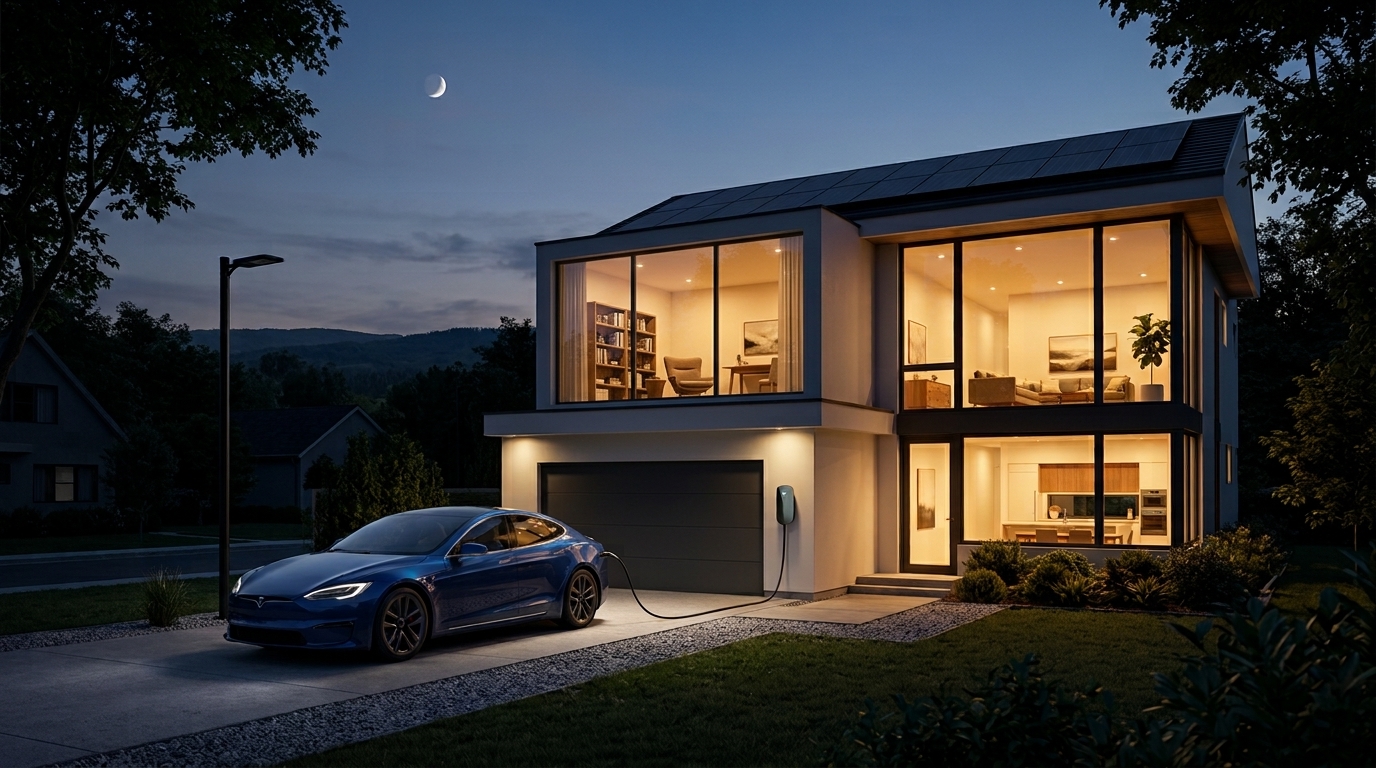
Electric vehicles (EVs) quite often carry enormous reserves of energy. Most of the time, that energy waits in the driveway for the next trip, but it has the potential to do much more. During an outage, it can keep the lights on, preserve the food in the refrigerator and run the heating or cooling systems that make a home livable. With the right equipment, that stored energy can also support the grid during normal operation, allowing EV owners to participate in programs that pay them to provide flexibility when demand changes.
The case for energy independence grows stronger by the day. Severe weather events have created an uptick in outages, while increased demand and aging infrastructure mean longer wait times for power to be restored.
An EV offers far more storage than most standalone home batteries. With the right equipment, that capacity can become a source of backup power and give homeowners more control over where their energy comes from. But capacity alone does not determine how well the system performs. The architecture moving that energy through the home matters too.
Backup Power Changes the Value of an EV
Most people buy an EV for transportation. Backup power gives that purchase a second role.
A typical EV battery stores enough energy to power essential household loads for days. Unlike a generator, the battery does not require fuel or produce exhaust. When paired with solar, it can also be replenished during an extended outage.
Backup capability depends on bidirectional charging, which allows an EV to take in electricity and send it back out or discharge it when needed. Its energy can power a home or be exported to support the larger grid.
But “bidirectional” only describes which way the power moves. Just as important is the type of path it travels between the EV, the home and other energy resources.
Two Paths from the EV to the Home
Like all batteries, an EV battery stores energy as direct current, or DC. Solar panels generate DC power, and home batteries store it in the same form. Homes, however, are wired for alternating current, or AC.
That mismatch requires power conversion. The key question is where that conversion happens and how often.
With AC vehicle-to-grid (V2G), the vehicle’s onboard power electronics convert the battery’s DC energy into AC before sending it to the home or grid. As technical standards evolve, this approach could allow EV owners to participate in utility programs that reduce demand or supply power to the grid.
Using AC V2G for home backup is more complicated. When an outage disconnects the home from the grid, the system needs additional equipment—specifically, a voltage-source inverter—to establish and manage the home’s electrical supply. AC V2G also integrates less naturally with solar panels and stationary batteries, which both store and produce energy as DC.
A DC-native system takes a different approach. It moves DC power out of the EV and manages conversion through power electronics installed at the home. The EV can then operate on the same DC backbone as solar panels and stationary storage, keeping the number of times the power is converted to a strict minimum.
This shared DC architecture allows energy to move among these resources without always passing through the home’s main electrical panel. That can reduce pressure on the panel and, in some cases, eliminate the need for a costly service upgrade. AC-coupled chargers, batteries and inverters may be easier to install individually, but adding several of them can exceed the panel’s capacity, leading to additional work and delays.
Both approaches can turn an EV into something that feeds energy to the home. The difference lies in how efficiently and flexibly they connect that capacity to the rest of the home energy system.
Conversion Comes at a Cost
Every time electricity changes between AC and DC, some energy is lost as heat. One conversion may seem minor. But across a home with solar, stationary storage and an EV, energy may be converted several times before it reaches its final destination, causing repetitive losses that accumulate over time.
Consider solar power used to charge an EV. The panels produce DC electricity, which may be converted to AC for the home and then back to DC for the EV battery. If that energy later returns from the EV to power the home, it must be converted to AC again.
Those steps consume some of the energy the system worked to capture and store. During normal grid operation, that waste can raise costs and reduce the value of solar production. During an outage, it can shorten the time the home can run on its available reserves.
A DC-native architecture follows a simpler rule: only convert to AC when needed. Otherwise, keep the energy in DC behind the meter.
Solar energy can move into a stationary battery or EV without making an unnecessary trip through AC. Power from the EV can remain in DC as the system coordinates it with solar and storage, only converted to AC when household appliances need it or for grid export. Reducing those conversion steps can produce dramatically lower losses, reduce equipment and EV wear and tear and bolster your energy independence.
Why DC-Native Architecture Is Better for Backup Power
AC V2G cannot provide backup power on its own. During an outage, the home needs additional equipment to safely disconnect from the grid and direct power from the EV to household circuits. Because the vehicle’s onboard inverter handles the power conversion, the system’s performance depends heavily on the capabilities built into the vehicle.
DC-native architecture moves that responsibility into the home energy system. This creates several advantages when the grid goes down.
- More usable stored energy. Fewer conversions mean less power is lost before it reaches the home. That helps preserve limited battery capacity during an outage.
- Better coordination with solar. Solar can send DC energy directly to the EV or a home battery. During a long outage, the system can use daytime production to replenish its reserves without unnecessary conversion.
- One system for multiple energy assets. The EV, solar panels and stationary battery can operate as parts of one energy system instead of separate products connected through AC.
- Smarter control over household power. An integrated system can decide when to use solar, when to draw from the EV, and when to rely on stationary storage based on real-time household demand.
Backup power is not simply a matter of discharging the largest available battery. A home may need to balance changing solar production, household demand and the driver’s transportation needs over several days.
A DC-native system can manage those decisions from one place. When the sun is out, solar can power the home and recharge available batteries. At night, the system can draw from stored energy. If reserves begin to run low, it can preserve critical loads while reducing power to less essential ones.
The result is a home that uses its available energy more deliberately and stretches it further.
What EV Owners Should Look For
EV buyers interested in backup power need to look beyond whether a vehicle supports bidirectional charging. The surrounding home infrastructure will determine how useful that capability becomes.
A well-designed system should include:
- A DC-native design that connects the EV with solar and stationary storage
- AC conversion only when power reaches appliances or the grid
- Automatic operation when an outage begins
- Central control over charging, discharging and household loads
- Compatibility with current and future bidirectional EVs
- The ability to preserve a minimum driving range chosen by the owner
These features turn a collection of energy products into a working home energy system. By preserving more stored power and coordinating how it is used, you can keep your home running longer during an outage and gain greater control over your energy supply.