How can you charge your autonomous-vehicle operation, heavy-duty EV fleet, or public charging network with existing infrastructure?
It’s not as easy as it sounds.
One of the biggest assumptions organizations make is that having electrical infrastructure already in place automatically makes large-scale electrification simple.
Every facility presents unique challenges.
Many existing sites were designed years before electric vehicle (EV) charging became a consideration. As a result, available electrical capacity may not be located where chargers are needed, distribution equipment may be fully utilized or future growth plans may compete for available power.
Even at facilities with sufficient capacity, fleet charging projects often require teams to answer important questions:
- Can existing switchgear and transformers support additional load?
- How will charging impact peak demand and utility costs?
- Is infrastructure located close enough to parking areas?
- What future charging needs should be planned for today?
- How can installation occur without disrupting ongoing operations?
By working through these challenges, fleet owners gain valuable experience balancing operational requirements, budget considerations and long-term expansion goals.
Lessons for light-duty fleets from heavy-duty charging
Installing fleet chargers in active environments often presents logistical challenges beyond the electrical work itself.
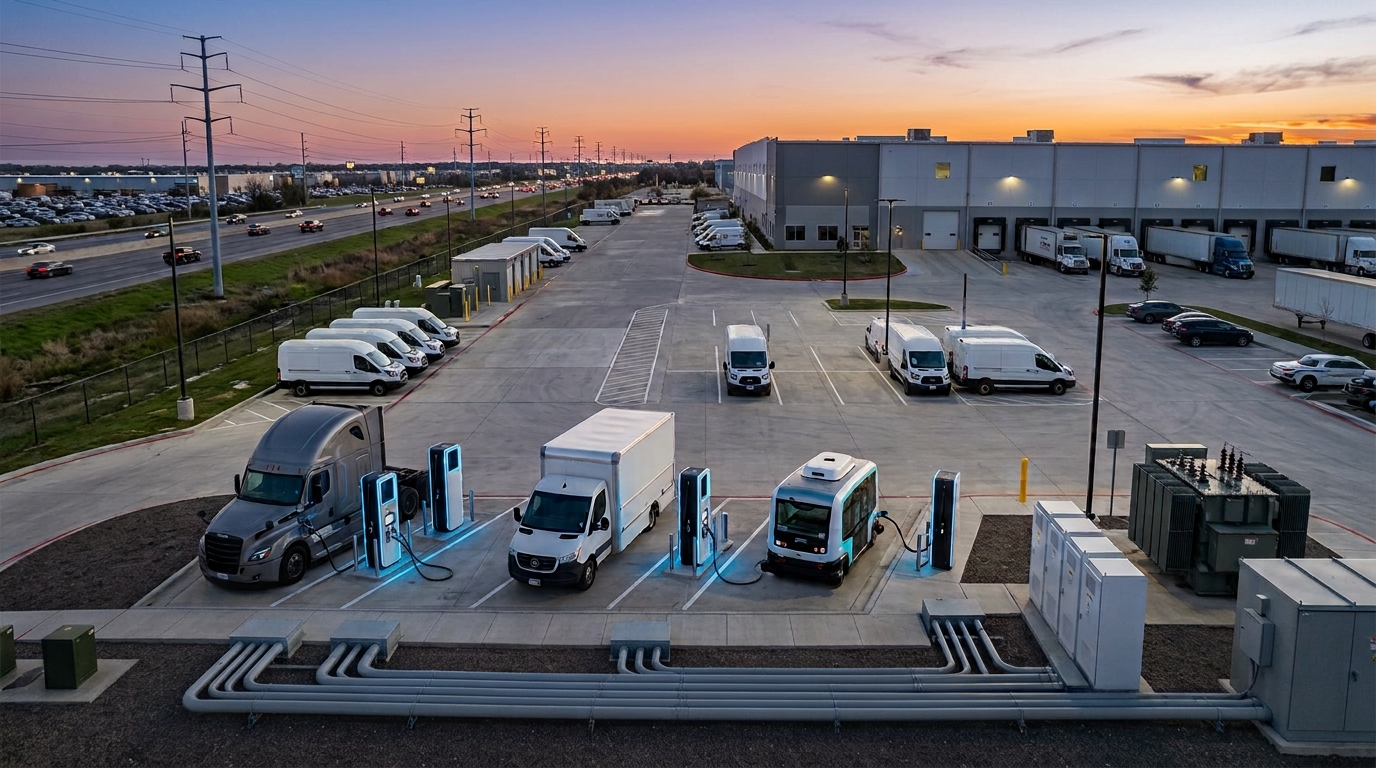
Trenching and routing conduit can be more complex than anticipated because of underground utilities, site layouts or existing infrastructure. Parking areas may need to remain operational during installation, requiring phased construction and careful coordination. At some locations, charger placement must balance user convenience with constructability and available power sources. Installing chargers closer to parking stalls may improve the driver experience but require longer conduit runs and increased installation costs. Conversely, locating chargers near existing electrical equipment may reduce infrastructure costs but create operational challenges for users.
What can you do to overcome these challenges? There are several different approaches.
Building for Future Demand in waste and refuse collection
We helped one of our clients, a national waste and refuse collection company with more than 17,000 vehicles, maximize long-term value by using engineering analysis, site assessments and energy modeling.
During the initial project, we evaluated the site’s future electrical demand and worked with the utility to bring in service capacity that can support later phases of electrification. Underground pathways, conduit, equipment locations and electrical distribution were also planned with future expansion in mind. Where it made economic sense, we installed infrastructure during the first phase, even though it may not be used until additional chargers are added years later.
This approach can require more investment upfront, but it helps avoid repeatedly disturbing an active fleet facility. Instead of trenching through the same yard multiple times, replacing undersized electrical equipment, or requesting another major utility upgrade, future phases can use infrastructure intentionally designed to accommodate growth.
For refuse and other commercial fleets, this can be especially important. These facilities operate on demanding schedules, and taking portions of a yard out of service for construction can affect daily operations. Completing the most disruptive infrastructure work during the initial deployment can make future charger additions faster, less disruptive and more cost-effective.
Freight Transportation Fleet Electrification at Scale
For another one of our clients, a major freight transportation company, we used multiple pilot charging projects to evaluate how electric trucks would perform across various operating environments.
Rather than immediately deploying charging infrastructure across its entire network, these pilot locations helped our client better understand vehicle performance, charging behavior, site requirements and operational impacts.
The experience reinforced the importance of developing a long-term infrastructure strategy before large-scale deployment. By assessing electrical capacity, utility coordination, charger placement and future power needs early in the process, fleet operators can create a scalable foundation that supports gradual expansion while avoiding costly redesigns later. This phased approach helps organizations align infrastructure investments with fleet growth and evolving technology requirements.
Integrating EV Charging From the Earliest Stages of Development
FTI‘s own Excellerate manufacturing facility in El Paso, Texas, provides an example of how charging infrastructure can be evaluated during the earliest stages of project development.
Key elements of our approach included:
- Planning from day one: As the prime contractor responsible for the facility’s electrical infrastructure, FTI evaluated future EV charging needs while designing the overall power distribution system.
- Engineering for future demand: FTI assessed current and future charging requirements through engineering analysis, site assessments and energy modeling to support long-term fleet electrification needs.
- Designing scalable infrastructure: The team planned conduit pathways, electrical rooms and distribution equipment to accommodate future chargers, helping avoid costly upgrades later.
- Leveraging existing power systems: By integrating charging infrastructure during design and construction, FTI better utilized the facility’s electrical infrastructure and created a foundation for future electrification.
Experience That Benefits Autonomous charging depots
The lesson is simple: the first EV charging project should not be designed only for the first group of electric vehicles. Understanding where the fleet is headed and preparing the site’s core infrastructure accordingly can turn a series of individual charging projects into a scalable, long-term electrification program.
EV fleet charging projects rarely come without challenges. Capacity constraints, utility coordination, equipment lead times, changing technology and long-term scalability all influence project success. Because we’ve worked through these obstacles with some of the largest fleets in the country, including our own, we bring practical experience to every customer engagement.
BIO

Nate Bevers is Vice President of EPC, Energy and eMobility at FTI. He leads strategy, customer engagement and business performance for the company’s energy and eMobility solutions, helping customers navigate fleet electrification, EV charging infrastructure, distributed energy resources and long-term energy strategies.