WATTMORE has been awarded a project with GTI Energy to provide the energy management system for a hydrogen-based microgrid research initiative in Des Plaines, Illinois.
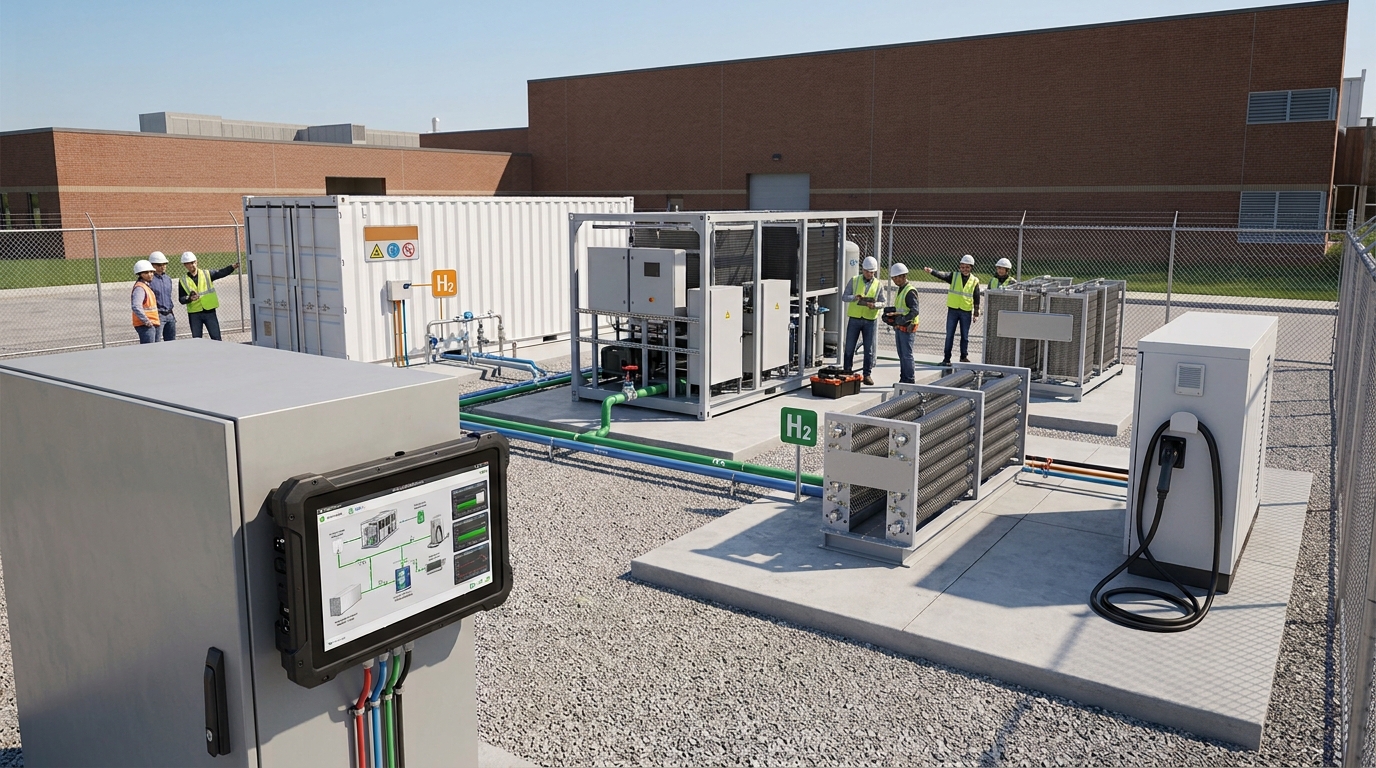
WATTMORE’s Intellect Operate energy management system will coordinate battery storage, a hydrogen fuel cell, programmable load banks and a DC grid charger at GTI Energy’s research facility.
The project will integrate battery storage into an existing microgrid testbed to evaluate how hydrogen, battery storage, charging equipment and advanced controls can operate together as an integrated energy system. Neither company disclosed the battery system’s capacity, hydrogen fuel cell rating, DC charger output, project value or expected completion date.
Project Snapshot
| Item | Details |
|---|---|
| Partners | WATTMORE and GTI Energy |
| Location | Des Plaines, Illinois, USA |
| Technology | Intellect Operate Energy Management System (EMS) |
| Assets Coordinated | Battery storage, hydrogen fuel cell, programmable load banks, DC grid charger |
| Objective | Evaluate integrated operation of hydrogen + battery microgrid for resilience |
| Status | Research and testing initiative; no commercial deployment announced |
| Disclosed Details | None on capacity, power ratings, schedule or project value |
Intellect Operate Will Coordinate the Microgrid Assets
WATTMORE’s primary role will be to manage the operation of the different energy assets connected to the testbed. The company’s Intellect Operate Energy Management System will coordinate the battery energy storage system, hydrogen fuel cell, programmable load banks and DC grid charger.
An energy management system provides the supervisory control layer that determines when controllable assets should operate. In a hybrid microgrid, it can coordinate generation, storage and electrical loads according to demand, equipment availability and operating requirements.
| Asset | Role in Testbed |
|---|---|
| Battery energy storage | Fast-responding storage, balances generation and demand |
| Hydrogen fuel cell | Controllable generation source |
| Programmable load banks | Simulate different demand profiles and operating scenarios |
| DC grid charger | Controllable charging-related electrical load |
For GTI Energy’s project, the platform will give researchers a common control environment in which to study how battery storage and hydrogen-based generation interact with changing loads and charging demand.
“Building more resilient energy systems requires understanding how emerging technologies work together in an operational environment,” said Kristine Wiley, Vice President of Energy Systems and Technology Integration at GTI Energy.
“This testbed allows us to evaluate the integration of hydrogen, energy storage, and advanced controls as a system, generating the practical insights needed to move promising solutions from development toward deployment.”
Battery Storage Added to Hydrogen-Based Microgrid Research
The project will introduce battery energy storage into GTI Energy’s existing hydrogen-based microgrid testbed.
Battery storage can respond rapidly to changes in electricity demand and generation. Within the testbed, it will operate alongside the hydrogen fuel cell rather than as a separate research system.
The hydrogen fuel cell will provide another controllable source of electricity, while the programmable load banks will allow GTI Energy to simulate different demand profiles and operating conditions.
The DC grid charger will add a charging-related electrical load to the test environment. This will allow the control platform to respond to changes in charger demand while coordinating the battery and fuel cell.
The announcement does not provide details about the charger’s power rating, connector standard or intended vehicle application. It should therefore be described as a component of the microgrid research platform rather than a confirmed public or fleet EV charging deployment.
GTI Energy to Evaluate Integrated System Performance
GTI Energy is an energy research and technology development organization based in Des Plaines. Its work includes research, demonstration, technical services and the development of technologies for lower-emission and more resilient energy systems.
The organization’s Hydrogen Technology Center brings together laboratories, testing capabilities and technical expertise for hydrogen production, storage, delivery, infrastructure, fuel cells and integrated energy applications.
For this project, the organization will evaluate the operation of hydrogen, energy storage and advanced controls as a combined system.
The testbed is expected to provide practical data about how the different assets respond under changing operating conditions. Programmable loads will allow researchers to recreate different demand scenarios without depending on a fixed real-world load profile.
The project may also help identify integration requirements and operating strategies that could support future resilient microgrids.
However, WATTMORE and GTI Energy have not disclosed the planned testing protocols, performance targets or conditions under which the microgrid will be evaluated.
The project remains a research initiative. The announcement does not indicate that the complete configuration has been selected for a particular commercial or infrastructure deployment.
Research Targets Infrastructure Energy Resilience
The project is focused on strengthening infrastructure energy security and resilience.
A resilient microgrid is designed to continue supporting critical electrical loads when the wider grid is disrupted or unavailable. The ability to maintain service depends on how generation, storage, controls and electrical demand are coordinated.
In a system containing both a hydrogen fuel cell and battery storage, the battery can provide a fast response to changing loads, while the fuel cell can supply electricity over a longer operating period. The energy management platform must coordinate these resources within their respective operating limits.
The programmable load banks at GTI Energy’s facility will allow researchers to test the combined system against different simulated demand conditions.
The inclusion of a DC charger will also enable the team to examine charging demand as part of the microgrid’s total electrical load.
“As a U.S.-based energy technology company, WATTMORE is especially proud to support research focused on strengthening energy resilience and advancing innovative power solutions,” said Jonathan W. Postal, CEO and founder of WATTMORE.
“We’re excited to contribute our technology and engineering expertise to a project at the intersection of energy storage, hydrogen, microgrids, and infrastructure energy resilience.”
WATTMORE Cites FEOC and BABA Compliance
WATTMORE said its energy management solution is compliant with Foreign Entity of Concern requirements and the Build America, Buy America Act.
The company has previously described the controls hardware supplied with Intellect Operate as FEOC and BABA compliant. It is positioning this compliance as relevant to US battery storage and infrastructure projects subject to domestic sourcing or federal funding requirements.
The specific requirements can vary according to the project, funding program, equipment category, component sourcing and regulations in force when a system is procured.
WATTMORE’s compliance statement should therefore be treated as a company claim. Project developers and customers remain responsible for determining whether individual equipment and systems satisfy the requirements applying to a particular project.
Intellect Operate Provides Multi-Asset Energy Controls
WATTMORE develops energy-management and power-control software for battery storage, solar installations, microgrids, virtual power plants and other distributed energy systems.
The company describes Intellect Operate as a vendor-independent energy management platform capable of integrating with batteries, power conversion systems, battery management systems, meters, generators, switchgear and other site equipment.
Within a battery energy storage project, an EMS determines when the battery should charge, discharge or remain idle. It operates within the limits communicated by the battery management system and can respond to site demand, system conditions and external control signals.
For the GTI Energy project, Intellect Operate’s role will extend beyond battery control. The platform will coordinate several technologies through a single control environment.
This multi-asset capability is the main technical focus of the project. It will allow GTI Energy to examine how software can manage hydrogen-based generation, battery storage, simulated electrical loads and DC charging equipment as one system.
The next stages will include deploying the control platform, integrating it with the equipment and testing the completed hydrogen and battery microgrid configuration.
WATTMORE and GTI Energy have not announced when integration will begin or when results from the testbed will become available.
For more information, see the official WATTMORE and GTI Energy project announcement.
FAQ: WATTMORE and GTI Energy Microgrid Project
What is WATTMORE’s project with GTI Energy?
WATTMORE will provide the energy management system for a hydrogen-based microgrid testbed at GTI Energy’s facility in Des Plaines, Illinois. The project will study the integration of hydrogen, battery storage, programmable loads, DC charging equipment and advanced controls.
What equipment will Intellect Operate coordinate?
WATTMORE’s Intellect Operate platform will coordinate a battery energy storage system, hydrogen fuel cell, programmable load banks and DC grid charger.
What is the purpose of the microgrid testbed?
The testbed will allow GTI Energy to evaluate how hydrogen, battery storage, charging equipment and energy-management controls operate together. The objective is to generate practical information that can support the development of more resilient energy systems.
Is this an EV charging deployment?
The testbed includes a DC grid charger, but the announcement does not identify a vehicle, fleet, connector standard or charging power. It is primarily a hydrogen and battery microgrid research project rather than a public EV charging installation.
What does an energy management system do in a microgrid?
An energy management system coordinates generation, battery storage and electrical loads. It determines when controllable assets should operate and helps the microgrid respond to changes in demand and system conditions.
When will the WATTMORE and GTI Energy project be completed?
The companies have not announced a deployment schedule, testing period or project completion date.