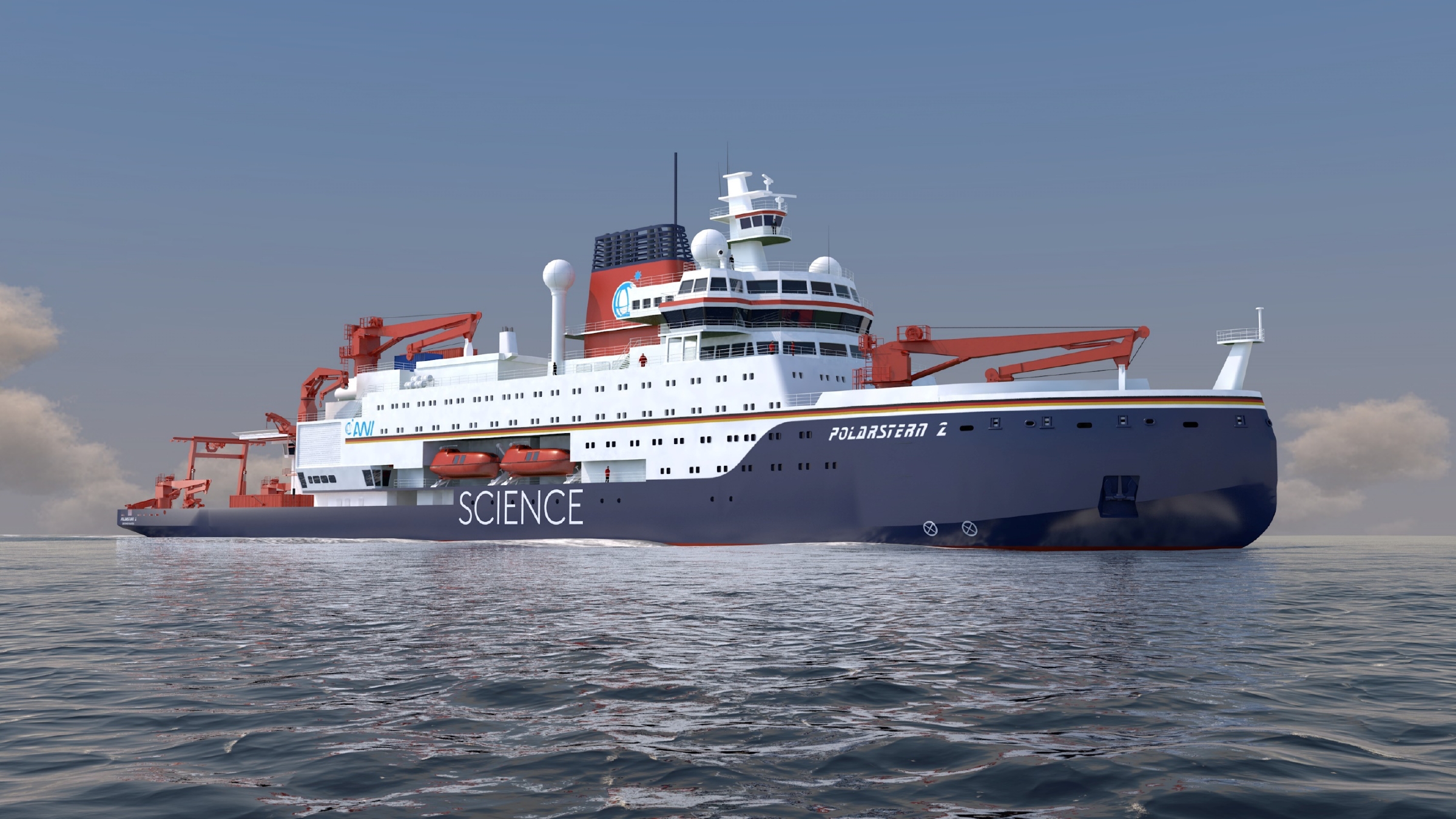
In a move that signals a new era for heavy-duty marine electrification, AYK Energy has announced it will supply the largest battery system ever installed on an ice-class vessel. The landmark contract will see AYK’s technology power Germany’s next-generation polar research ship, the Polarstern II, marking a significant milestone for energy storage in extreme environments.
The project, developed for the Alfred Wegener Institute, involves a direct partnership with Wärtsilä, the global leader in marine electrical integration. It places AYK’s “Pisces+” battery system at the heart of one of the world’s most sophisticated hybrid propulsion architectures.
Engineering for the Extremes
The sheer scale of the installation is record-breaking: a 16 megawatt-hour (MWh) capacity system weighing 131 tonnes. However, the true challenge lies not just in the size, but in the environment. Designed to replace Germany’s current flagship, the new Polarstern must endure year-round operations in the Arctic and Antarctic, often navigating through heavy ice for extended missions.
“Polar research vessels operate at the absolute limits of what ships and onboard systems are expected to endure,” said Chris Kruger, founder and President of AYK Energy. “To be selected for a project of such complexity is a strong validation of AYK’s technology, particularly when safety and performance under extreme conditions are non-negotiable.”
Decarbonization Meets Scientific Precision
The Pisces+ battery system will serve as the cornerstone of the vessel’s diesel-electric power architecture. In the context of polar research, the benefits of hybridization extend beyond fuel savings:
- Peak Shaving & Load Optimization: Ensuring the engines run at maximum efficiency even during variable power demands.
- Low-Emission Research: Enabling the ship to operate on pure battery power during sensitive scientific work in protected waters.
- Acoustic Advantages: Reducing noise and vibration—critical factors when onboard sensors are measuring delicate marine ecosystems or ice thickness.
A Turning Point for Marine Battery Tech
The integration of a 16MWh system into an ice-breaker suggests that the maritime industry is moving past the “pilot phase” of electrification. While multi-megawatt systems have become common in short-sea ferries, applying this technology to a vessel that must smash through thick ice in sub-zero temperatures proves that battery reliability has reached a new maturity.
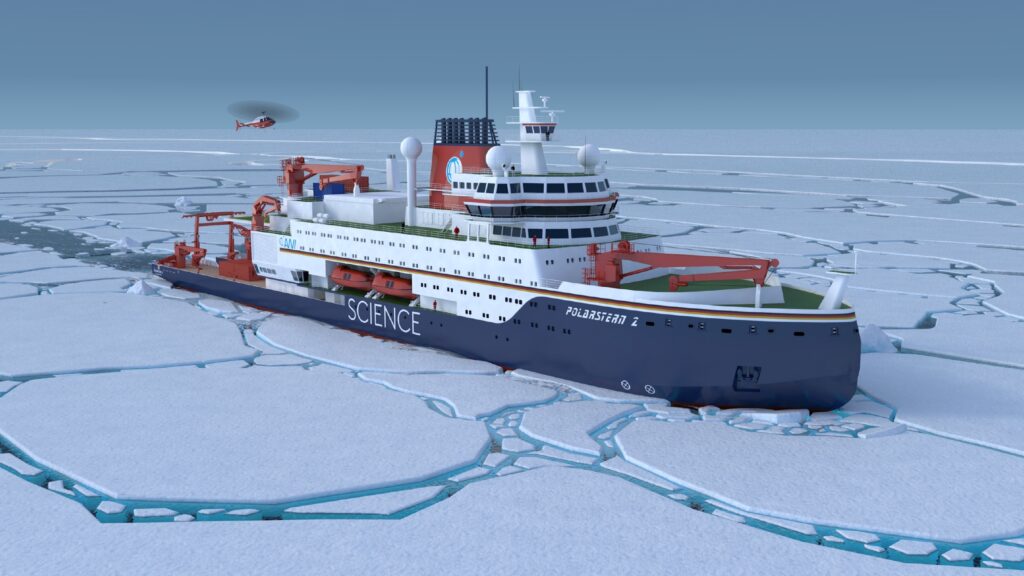
“Batteries are no longer a niche solution,” Kruger noted. “They are becoming a core part of how complex ships are designed. This project underlines that batteries can deliver real operational value, even in the most demanding use cases.”
Timeline to Launch
The battery system is scheduled for delivery in 2028, with the Polarstern II expected to enter full service in 2030. For the EV and charging industry, this project serves as a high-profile case study in high-density storage and the ruggedization of power electronics—lessons that often trickle down from the marine sector into heavy-duty land transport and grid-scale storage solutions.