

By Ryan Sodamann, Vice President, National Solution Services (NS2) at Faith Technologies Incorporated (FTI).
What’s the perfect EV charging transaction? When a driver plugs in the charger, the vehicle charges, payment is made and life goes on … perfect!
Anything other than a seamless customer interaction can generate frustration, and confidence in EV charging takes a hit. What a driver doesn’t know is that their experience doesn’t always rely on the performance of the EV charger itself.
They don’t realize that there’s critical technology feeding the charger; the behind-the-scenes electrical ecosystem we’re going to explore in this article. The safe delivery of power to an EV charging device allows the use of the electrification process that exists within the charger. Without it, drivers are unhappy.
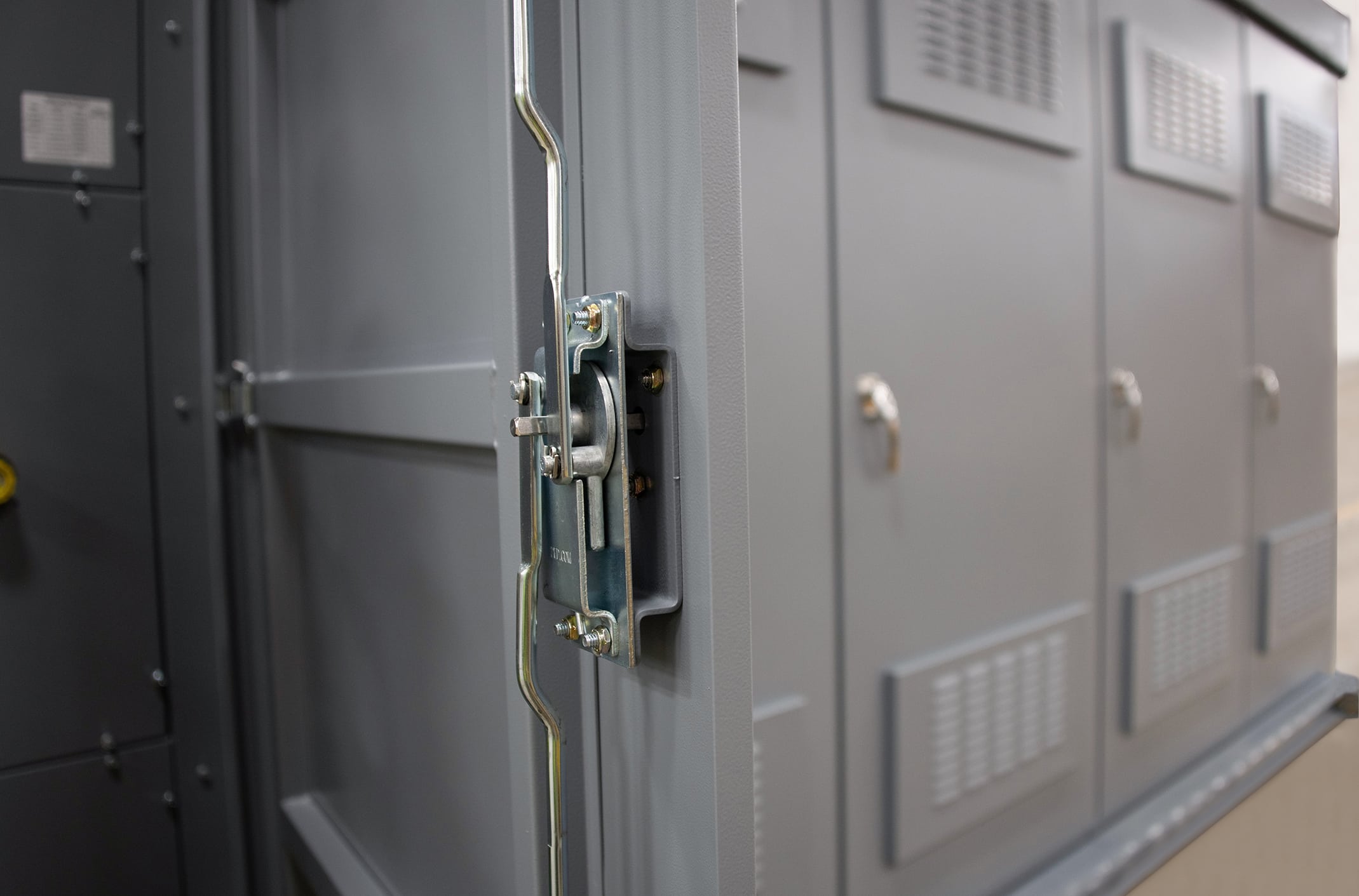
Many different individual components (constantly working in the background) make up an entire EV charging site. For short, we sometimes call this the “gray box.”
What is the Gray Box?
No matter how you look at an EV charging site – from a construction, servicing or charge point operator (CPO) perspective – a lot of preemptive work must be done to allow that site to perform as end users expect. It starts with site preparation, engineering drawings, submittals, power and permitting, and it continues into inspections and CTEP certifications on the charger prior to being commissioned.
I mention that complex preemptive work because controlling it all comes down to the gray box.
At FTI, we use the term “gray box” to describe the switchboard and electrical infrastructure that play a critical role in keeping EV chargers operating efficiently and reliably. Simply put, the gray box is the electrical ecosystem feeding an EV charging unit. This is the entire electrical infrastructure: distribution equipment, panel boards, disconnects, meters, conductors and transformers. Although it’s separate from the EV charger itself, the gray box is a vital part of the whole system.
The Critical Importance of Total Site Strategy
The seamless customer interaction mentioned earlier may seem simple: plug, charge, pay and go, right? Yes, an end-user judges EV charging by their experience at the handle. In reality, so much more is happening.
It’s the site’s behind-the-scenes electrical infrastructure that actually determines if performance will meet expectations.
Consider the underground conductors that feed the charger. That alone is a complex process: installing conduit undergrade, pulling wire in the conduit, making terminations, etc. These are all important points of operation that, from a service point of view, are now potential critical points of failure. And that’s just one example.
There are three pillars of EV charger success that make up a successful whole cycle, and they all rely on one common thing: power. Having power where and when it’s needed means these three key components work in unison for a comprehensive total site strategy.
- The Utility Company: high-voltage power is provided through their equipment and connection to the site
- The Electrical Contractor: a licensed general contractor sets up how to use and distribute the power, keeping the customer’s goals in mind so all three components integrate for a successful project
- The EV Charging Equipment: allows for independent control of individual chargers; includes communication cables (CAT5 fiber optics) for internet point-of-sale connectivity; EV chargers interact with end users
Although the company I represent is technically in the second bullet within that framework, a premier electrical contractor connects all three pillars. It strategizes with utility companies for site preparation, and it also understands various types of EV charging equipment to properly distribute the power. The best-of-the-best stand out because they coordinate these relationships as they add a rare combination of technical knowledge, industry presence and buying power.
On a related note, I shared in a previous article the way to reduce finger-pointing between these three pillars when a charger goes down: a service level agreement (SLA). SLAs clearly define responsibilities and establish escalation protocols as well as specify KPIs, so performance expectations are crystal clear.
Future Proof EV Charging Sites
Make no mistake, danger is present. Modern, fast EV chargers handle large loads, and safety must be prioritized. Take one shortcut, and a severe electrical issue could impact the site’s performance or, even worse, cause safety concerns due to improper installation.
Liability exists that some people don’t recognize or understand. This is an important conversation to have with a licensed, reputable, trusted industry professional that will have your best interests in mind for the years to come. You need to select the right partner for what you’re trying to accomplish today and into the future. More on that later.
Not All Electrical Contractors are Created Equal
Most of the very different components inside the gray box require an experienced, qualified electrical contractor that is engaged and can confidently answer some big, important questions that drive success:
- “Can you meet the safety needs of your team members and protect your servicing partners?”
- “Do you have proper insurance on the site to meet the applicable codes of the city or municipality?”
- “What NFPA 70B electrical maintenance practices are mandatory to develop, implement and maintain electrical components and infrastructure?”
- “Can you help develop maintenance procedures and plans to take care of electrical devices and equipment?”
- “Aesthetically, will the EV charging area look as pleasing as possible, which is key to the customer experience?”
Few electrical contractors can answer all these important questions. I can’t stress enough the importance of having the right collaborative conversations up front between the electrical contractor, the utility company and the city. Doing your due diligence early ensures the small details are addressed, appropriate licensing is obtained and partners are ready to stand behind the product and installation, minimizing worries at every step.
You Get What You Pay For
A significant amount of time and expense is involved when deciding to get into the EV space: a solid strategy, the right contractor, the perfect setup, the right equipment and much more. Upfront costs can be intimidating, but this is no time to skimp.
I’ve been around the electrical industry for a long time, and cheap/quick/fast is not always the best answer when it comes to your electrical infrastructure. Poor installations need to be fixed far too soon, and that includes costly downtime. Ultimately, you’ll pay for it twice, which isn’t comfortable when investments into an asset portfolio are expected to drive a return on those investments.
Once again, ultimate success requires a comprehensive total site strategy. When you go world-class ─ experience, expertise, technicians, industry knowledge, dedication ─ you get experts in the industry ready to provide a true end-to-end commitment.
Within the gray box and beyond, an experienced partner provides insights on total site strategy, understands failure possibilities, sees problems before they become problems and embraces collaborative conversations to holistically manage an EV site for future success.
Let me know what you think. Connect with me on LinkedIn, and let’s have a conversation about the gray box.
BIO

Ryan Sodamann is Vice President, National Solution Services, at Faith Technologies Incorporated (FTI), which provides end-to-end solutions that integrate design, technology, and service to support the performance and reliability of EV infrastructure. With extensive expertise in service level agreements, nationwide distributive services and Network Operations Center (NOC) management, Ryan optimizes uptime and efficiency for EV infrastructure. His strategic leadership in asset management and preventative/reactive maintenance ensures seamless operations, making him a trusted authority in EV servicing.

 explains the "gray box" electrical infrastructure and how to future-proof your site.)